marijuana legalization

̶1̶0̶ 12 Reasons Why Marijuana Should Not Be Federally Legal

In a nation standing at the crossroads of change, the debate over federal legalization of marijuana unfolds with varying perspectives and uncharted implications. This article ventures beyond the conventional arguments, exploring the multifaceted and often overlooked aspects of this significant decision.

2 Min Read
January 19, 2024

Views

1620

Likes

3

In the midst of heated discussions about marijuana and its place in federal law, we delve into a lesser-explored side of the debate. This article uncovers a series of thought-provoking reasons that challenge common perceptions about marijuana legalization. Prepare to embark on an enlightening journey that delves into the potential ripple effects of such a significant policy change. What unfolds may not only surprise you but also offer a fresh perspective on a topic that’s as complex as it is controversial.

Table of Contents

    TL;DR
    Copy
    Copied to clipboard!

    Explore 12 compelling reasons why marijuana should not be federally legal. This article delves into a variety of unexpected societal and cultural shifts that could arise from federal legalization, presenting thought-provoking scenarios that might just change your perspective on the issue. A must-read for anyone following the marijuana legalization debate.

    Reason 1: The Great Snack Shortage

    The Great Snack Shortage" has been created. It humorously illustrates an empty grocery store aisle, emphasizing the theme of a snack shortage related to the munchies from marijuana legalization.
    Too many munchies

    A nationwide increase in munchies could lead to an unprecedented snack crisis. The implications are vast – from grocery store aisles depleted of chips and cookies to ice cream vanishing from freezers. Not to mention, the economic impact on snack manufacturing and the potential strain on food supply chains. This isn’t just about satisfying cravings; it’s a matter of national snack security.

    Reason 2: Rise of the Couch Kingdom

    It whimsically depicts an overcrowded living room with various people lounging on elaborate couches, humorously illustrating the concept of a society where couches become central due to marijuana legalization.
    Couch locked society?

    Envision a society where the couch becomes the ultimate symbol of status and comfort. This shift could lead to a dramatic transformation in interior design trends, with couches becoming more elaborate and multifunctional. However, the potential decline in physical activity and community engagement poses serious questions about the social and health implications of a couch-centric lifestyle.

    Reason 3: Unbridled Artistic Expression
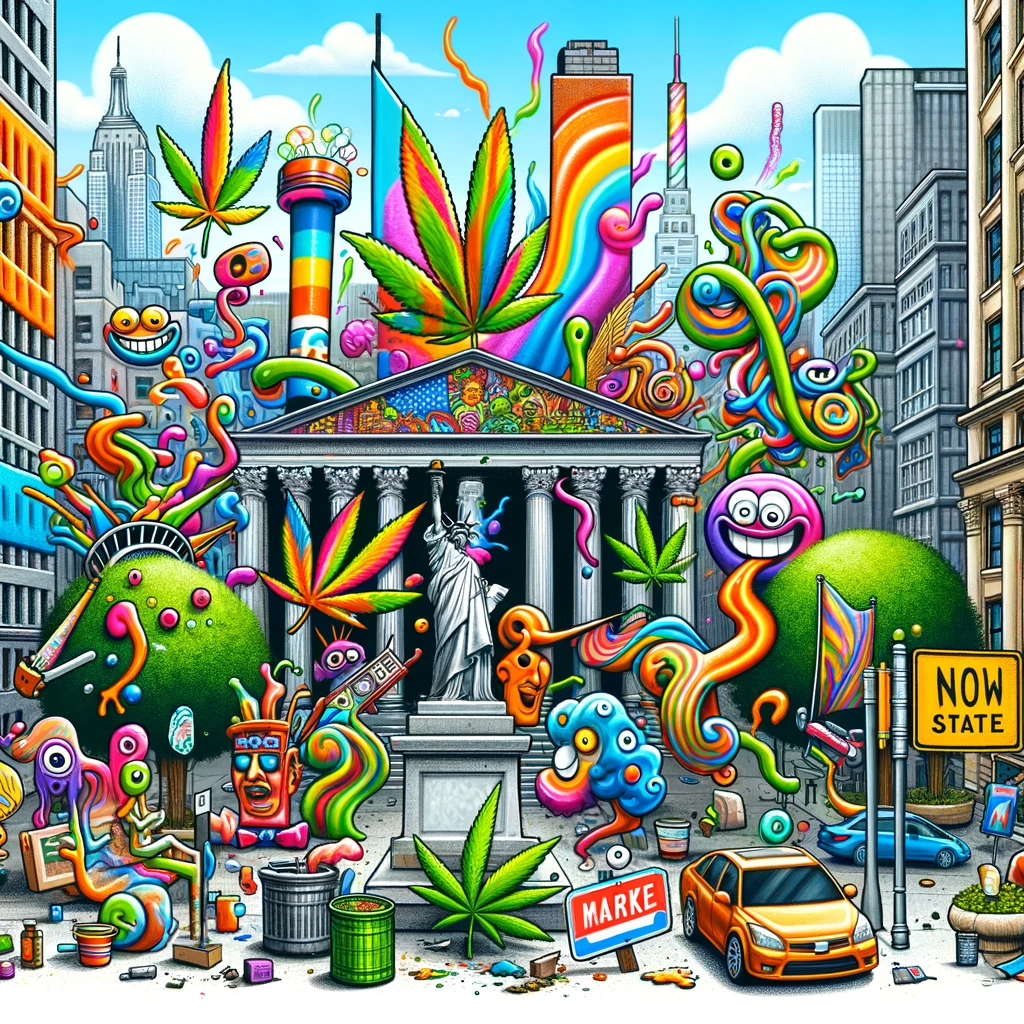
     It playfully illustrates a cityscape transformed by a burst of creativity, with everyday objects turned into quirky pieces of art. This image humorously reflects the concept of a society teeming with artistic expression due to marijuana legalization.
    Weed art

    With marijuana’s influence on creativity, we could witness an artistic renaissance in our neighborhoods. While this surge in artistic expression would certainly beautify our cities and inspire our communities, it might also blur the lines between public art and graffiti, between creative expression and visual noise. The challenge will be to channel this creativity constructively.

    Reason 4: National Nap Time

    It whimsically shows a city scene where the streets are unusually quiet and people are seen napping in various public places, humorously depicting a society that embraces napping as a widespread pastime due to the relaxing effects of marijuana.
    national-nap-time

    The normalization of napping, influenced by marijuana’s relaxing properties, could redefine our workday structure. This cultural shift towards embracing rest is not without merit, potentially leading to a more relaxed and possibly healthier society. Yet, it raises questions about productivity and the balance between work and leisure in a nation already struggling with work-life balance.

    Reason 5: Inescapable Giggles

     It humorously depicts a formal business meeting where participants are overcome with laughter, unable to control their amusement in this usually serious setting.
    this would make work way more fun!

    The light-heartedness brought on by marijuana could infiltrate serious environments – from boardrooms to courtrooms. While laughter is indeed the best medicine, its presence in traditionally solemn settings might undermine the gravity of important situations and discussions. Finding the right balance between humor and seriousness could become a new societal challenge.

    Reason 6: Philosophical Pets

     It whimsically shows pets in deep thought, such as a dog contemplatively staring at a butterfly and a cat looking thoughtfully out of a window. This illustration humorously conveys the idea of pets experiencing a deeper level of consciousness, potentially due to CBD usage, in a world where marijuana is federally legal.
    a stoned pet?

    Our pets, under the influence of CBD, might start exhibiting behaviors that suggest deeper contemplation. This shift could not only change the way we interact with our pets but also raise intriguing questions about animal consciousness and intelligence. It’s a fascinating prospect, but it also ventures into uncharted ethical territories.

    Reason 7: A Too-Peaceful Society

    friendly-stranger
    friendly-stranger

    An overly relaxed society, while seemingly utopian, might struggle with motivation and drive. The impact on industries that thrive on competition and innovation could be significant. This newfound peace might foster a more cooperative and less stressful society, but at what cost to progress and ambition?

    Reason 8: Drama Drought in Entertainment

    It comically shows a TV studio set for a drama show, where the actors appear too relaxed and disinterested in creating any conflict. The illustration humorously portrays actors lounging, yawning, and casually chatting, with a bored and frustrated director, emphasizing the impact of marijuana legalization on the entertainment industry's shift in storytelling and content creation.
    a TV studio set for a drama show, where the actors appear too relaxed and disinterested in creating any conflict.

    The potential reduction in drama, both in real life and in entertainment, could lead to content that lacks the excitement and conflict that audiences crave. While this could pave the way for more positive and uplifting media, the entertainment industry might struggle to adapt to these new storytelling norms.

    Reason 9: Collective Forgetfulness

    forgetfulness
    forgetfulness

    A laid-back, forgetful society could lead to amusing anecdotes, but also practical challenges in maintaining schedules, meeting deadlines, and keeping track of important information. This could affect everything from personal responsibilities to broader organizational and governmental functions.

    Reason 10: Fast Food Revolution

    fastfood
    fast food but slow food mon

    As palates change and demand for more sophisticated flavors rises, the fast-food industry might have to reinvent itself. This could lead to a culinary renaissance, with fast food becoming more diverse and gourmet. However, it could also mean the loss of simple, comforting classics that many have grown to love.

    Reason 11: Casual Overload in Fashion

    weed-fashion
    weed fashion at work hehe

    With comfort becoming the new norm in fashion, we could see a drastic shift in professional attire and general dress codes. This relaxation in fashion standards might be liberating for many, but it also raises questions about maintaining a sense of professionalism and decorum in various settings.

    Reason 12: People Talking to Plants

    people-talking-to-plants
    people-talking-to-plants

    Engaging with plants on a deeper level could be a side effect of widespread marijuana use. This new-found plant empathy might increase environmental awareness and foster a deeper connection with nature. However, it also presents a quirky image of future human-plant interactions, potentially altering the dynamics of indoor and outdoor spaces.

    Conclusion: While these points inject a dose of humor into the serious discussion of federal marijuana legalization, they also aim to highlight some unconventional but plausible outcomes. As the debate continues, it’s important to consider a wide range of potential impacts – some of which might be less obvious but no less significant.

    Was this helpful?

    Thanks for your feedback!
    Share Your Thoughts: Join the Discussion Below

    Leave a Comment

    Your email address will not be published. Required fields are marked *

    About Author
    Author PhotoLeighana Lynn

    Leighana is a dynamic and driven individual making her mark in the burgeoning cannabis industry. Her journey is fueled by a deep-rooted passion for both cannabis and the art of... Read More

    About Author
    Author PhotoLeighana Lynn

    Leighana is a dynamic and driven individual making her mark in the burgeoning cannabis industry. Her journey is fueled by a deep-rooted passion for both cannabis and the art of... Read More

    You May Also Like
    About Author
    Author PhotoLeighana Lynn

    Leighana is a dynamic and driven individual making her mark in the burgeoning cannabis industry. Her journey is fueled by a deep-rooted passion for both cannabis and the art of... Read More

    Table of Contents

      Our Newsletter

      Subscribe to our newsletter to receive more updates

      Please enable JavaScript in your browser to complete this form.

      Follow us on

      Success

      This is a success message

      Error

      Something is wrong.

      Scroll to Top